
Investment Strategy
A total portfolio approach to Brazil

At PSG Asset Management, we firmly believe that an integrated portfolio approach enables us to deliver better outcomes to our clients. In our latest Angles & Perspectives, we delve deeply into our approach to portfolio construction and risk management, and the similarities to a total portfolio approach (TPA).
Over the past year, we often highlighted the value we saw in Brazil and the fact that we found select Brazilian bonds and equities attractive. Following the unexpected election of Luiz Inácio Lula da Silva for a fourth term as the country’s president, Brazilian stock markets took a tumble, falling more than 20% on a single day on 26 October. Brazilian bonds sold off, and the currency also weakened sharply. This Brazilian market turmoil provides an excellent opportunity for us to demonstrate how our integrated approach helps us to manage risks in our portfolio.
Let’s start by clearing up some misconceptions around our portfolio construction process.
Our portfolio positions are based primarily on bottom-up detailed research, not a macro view
One misunderstanding about our approach to investing is that a positive macro-outlook on assets in a particular sector or region automatically translates into inclusion of related assets in our portfolios. This is not the case. As we are bottom-up managers, every asset in our portfolio has to make it onto our buylists on its own merits. This means it has to pass both the quality assessment (moat and management) and the price overlay (margin of safety) analysis convincingly enough to outcompete other assets on a risk-adjusted basis, to make it onto our buylists. Our macro work is primarily to identify and assess portfolio risks not evident when doing detailed bottom-up research. A positive outlook on a sector or geographic area generally reflects the fact that we have identified a number of exciting opportunities in that area on a bottom-up basis using our 3M research process.
Searching for opportunities where we are ‘paid to wait’ and the asymmetry of potential outcomes is skewed in our favour
Moreover, inclusion in our buylists is based on things ‘as they are’, not things as ‘we’d like them to be’. This distinction is important. While we sometimes buy assets with the view that things are likely (on a balance of probabilities) to improve, our base case is generally conservative, frequently assuming the environment remains unchanged. We find it extremely attractive when assets are poised to deliver reasonable returns even if the relevant sector of the economy doesn’t grow and the asset doesn’t rerate. Where these opportunities are underpinned by strong free cash flow generation that is distributed to shareholders through sizeable dividends plus buybacks, we feel we are effectively being ‘paid to wait.’ The asymmetry of potential outcomes is skewed in our favour, with solid returns if nothing changes, and attractive upside optionality if the environment improves.
Use of the buylists across mandates and over time
It is also important to understand that while our buylists serve all our funds, the use of the buylists differs across portfolios and mandates. Each fund manager has to consider how each asset on a buylist will most likely behave under various scenarios relative to other assets on other buylists, and use the buylists accordingly. For example, the PSG Stable Fund will explicitly consider its SA bond exposure when selecting and sizing equity exposure to banks. This may result in a lower exposure to banks within its equity component than in the PSG Equity Fund or the PSG Flexible Fund.
As share prices change and new information becomes available, the assessment of moat, management and margin of safety (the 3Ms) changes. Fund managers adjust their exposures accordingly on a real-time basis as these changes occur. Buylist changes, which are subject to research and discussion by the investment committee, can lag activity in the funds.
We do not size portfolio positions in isolation, or relative to an index
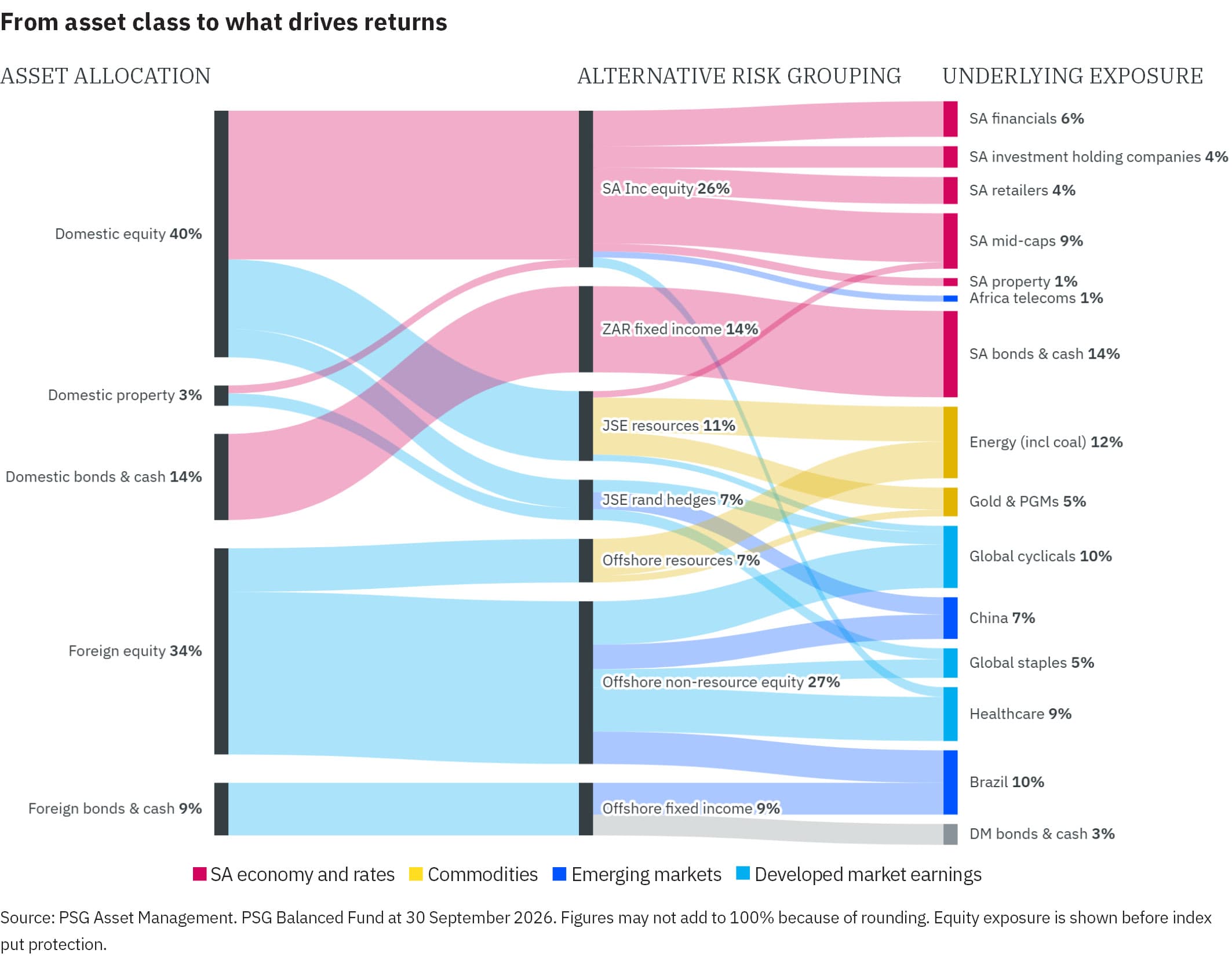
Many managers consider their portfolio holding positions relative to an index position, either up- or downweighting specific sectors and stocks depending on their views. At PSG Asset Management, portfolio positioning is primarily based on our assessment of the return and risk characteristics of the specific asset, both on a stand-alone basis and, more importantly, in combination with other assets as part of the overall portfolio assessment. This means we consider the linkages and similarities in the performance drivers for various assets across the portfolio in various scenarios, taking their combined impact into account. This is important because, for example, bonds and equities may be exposed to similar linked performance drivers, and yet their weightings would ordinarily not be considered in combination when assessing risk.
Back to Brazil
We have held a positive view on Brazilian assets for several years, based on improving fundamentals and attractive valuations. Brazilian assets had been out of favour for some time and this negative view was reflected in low asset prices. While the risk premium for bonds reflected some genuine fiscal concerns, the market was broadly priced for extremely negative outcomes. Brazilian government bonds offered attractive high real (after-inflation) yields, and many Brazilian companies have excellent management teams and good growth track records, yet trade at very low ratings relative to their earnings and prospects, even under a status quo scenario. Our medium-term investment case for Brazil was never dependent on a change of political control in the country.
After the first election round on 4 October 2026, markets repriced strongly on expectations of tighter fiscal policy under Flávio Bolsonaro and a shift to the right in Congress. Until 2026, no presidential candidate who won the first round had subsequently lost the run-off election, and the market surged ahead. Given the strong asset price movements in October and resultant change in margin of safety and pay-off profile of potential outcomes, we sold nearly R1.4 billion of Brazilian shares across our funds. This locked in some gains while maintaining meaningful exposure to an opportunity we still found attractive longer term, and reduced the overall risk in our portfolios heading into the binary outcome associated with the run-off election. We kept our Brazilian bond holdings which we believed were appropriately sized, given the high real yields still available and the increased probability of an improved fiscal outlook.
Following the run-off, Brazilian shares, bonds and the Brazilian real fell sharply as markets adjusted to an unexpected result, with many assets giving back the gains made in October 2026 after the first election round. The asset price movements did not reflect a change in Brazil’s longer-term underlying fundamentals or the prospects of the businesses we own, but rather a change in sentiment as a result of a likely delay of needed fiscal reform. The same election moved Brazil’s Congress to the right – this is likely to act as a handbrake on any proposal for increased government spending. We will watch the new administration’s fiscal decisions closely.
In a diversified portfolio, some positions will move against us over any given period, and our job is to make sure no single outcome can do lasting damage to our investors’ long-term investment outcomes. It is worth noting that, while our overall Brazilian exposure appeared fairly large, some of our Brazilian holdings have very different drivers to the rest of Brazil Inc. For example, the Brazilian energy major Petrobras is more correlated with oil price movements than with Brazilian-specific issues.
Our funds continue to deliver for our clients
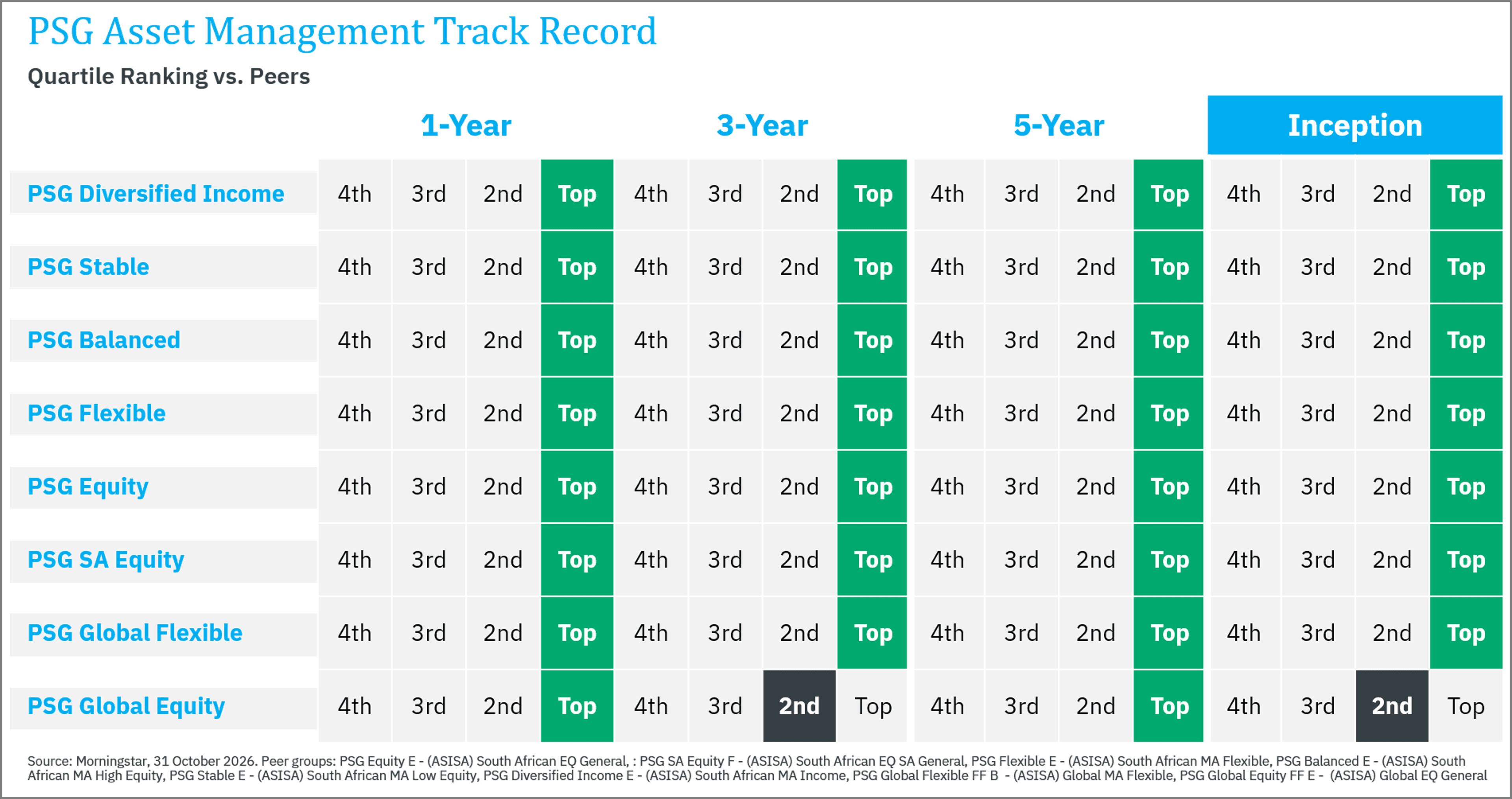
While we generally do not focus on short-term performance data, it is worth noting that the impact on our funds was limited on the day, and by month-end performance for our funds remained strong across categories. Our Brazilian exposures, which have been adjusted over time as facts changed, have been contributors to the performance of our funds.
As always, we remain focused on finding excellent risk-adjusted opportunities for our clients. An integrated investment process puts us in an excellent position to construct resilient portfolios for our clients and to deliver in line with the fund objectives over time.
John Gilchrist is the Chief Investment Officer at PSG Asset Management.
Share