Fraudulent Telegram and WhatsApp groups
Please beware of fraudulent Telegram and WhatsApp groups impersonating PSG Financial Services, our divisions and our advisers. Be cautious, verify links and contact your adviser or Client Services if you have any queries or concerns.
05
October 2022
The role of growth assets in creating intergenerational wealth
Nirdev Desai, Head of Sales
PSG Asset Management
From a life expectancy perspective, there has never been a better time to be alive - the average life expectancy has crept up steadily in both developed and developing markets. Interestingly, China, a developing economy, now has a higher life expectancy than the United States (Quartz.inc). Together with life expectancy, quality of life is also improving as poverty is being eradicated.

“ Growth assets – like listed equities – are the best way to achieve inflation-beating returns. ”
At the same time however, consumerism combined with instant gratification and lifestyle creep combined with easier credit extensions to consumers has resulted in the average individual having less available capital to draw on during traditional non-income earning periods (such as retirement, sabbaticals, retrenchments etc). Balancing a lifetime of earning ability, more time for exposure to growth assets in a lifetime, and the effect of compound growth is the opportunity for intergenerational wealth that can be harnessed within this improving world.
An investment plan that will stand the test of time needs time
Investments need to have exposure to growth assets to address inflation. Growth assets – like listed equities – are the best way to achieve inflation-beating returns. They require time however, with a typical minimum recommended period of ten years. A robust holistic financial plan traditionally allocates a component of the plan towards growth assets, but investor behaviour often detracts from these growth assets’ ability to deliver on their expected returns. Examples of this are when fund changes are made to similar types of investment strategies or when investors sell out of markets at the worst possible times. Despite having more information being at their fingertips, investors’ biases often result in actions that cause damage to otherwise well-structured plans.
The graph below clearly shows how the recent major market sell-off (which occurred during the initial stages of the Covid pandemic) locked in paper losses and did not participate in the recovery.
Nearly one third of investors above 65 sold all of their stocks sometime between February and May.
Share of individual investors who sold all of their equity holdings
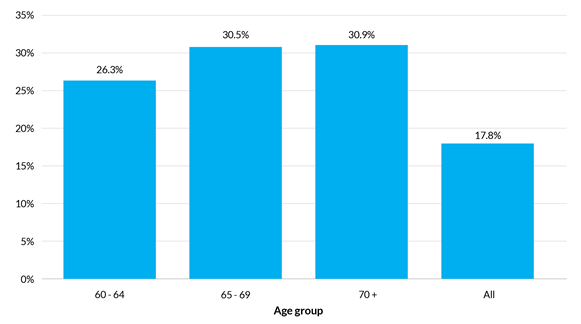
Source: LPL Research, Fidelity Investments 6 June 2020
Economic and market-linked crisis events tend to cloud investors’ judgment. To minimise panic surrounding paper losses on growth assets, investors should ensure that they use the services of an accredited financial planner to co-craft and implement a holistic financial plan that also caters to other goals they may have (like sabbaticals) and curveballs that life may throw at them (including retrenchment, divorce, or additional dependants). By considering the investment plan in its totality, and ensuring that other needs are met, the growth assets will be best placed to reliably achieve the returns expected of them, within an appropriate time frame.
Have clear intent of your legacy
Unpacking the legacy you would like to leave, and ensuring there is clarity and efficiency on transitioning this legacy when the time comes, requires a clear plan that incorporates estate-, tax-, and investment planning at the very minimum. Further, it is crucial that your intended legacy be understood, as every individual has a personal relationship with money. The latest research has shown that the way children are raised heavily influences their relationship with money, so it is advisable to instil healthy habits in your children that will enable them to continue your financial legacy in a sustainable way. While many investors believe future inheritance and legacy makes a consoling gift to their beneficiaries when they pass away (and thus leave the details of their estate as a surprise), many financial planners prefer to include future beneficiaries in planning reviews to ensure that a consistent and clear message is delivered and agreed to before the transition of this wealth.
Is it only for the wealthy?
An estate below the current R3.5m abatement level may not seem like much, and if instant gratification were to get the better of such assets, they might soon disappear into goods with embedded obsolescence and declining value. However, with a clear plan to build a sustainable intergenerational financial plan, an amount of R3.5m invested over a period that allows for the creation of intergeneration wealth (and minimising any withdrawals), will grow into a substantial sum. The graphic below shows how R3.5m invested into the JSE FTSE ALSI 25 years ago would have grown, with and without taking dividends. Even if an individual were living off the dividends paid out illustrated below, they would be what is considered a ‘high net worth individual’ (commonly defined as an individual with liquid assets of at least USD 1 million).
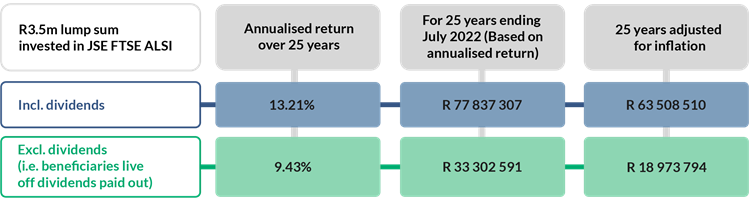
The intention of such a legacy will require buy-in however. A trusted financial planner can assist in defining the intent of legacy assets and ensuring the scrutiny of the intent. This, combined with values and relationships with money nurtured in beneficiaries, will go a long way to creating substantial intergenerational wealth.
Finally, it is important to make sure you have a valid will in place that is unambiguous, creates a clear map for the next journey of your legacy, and ensures that intergenerational wealth becomes that gift that keeps on giving. Ensure that your will is reviewed regularly, as your circumstances may change. Enlist the services of a trusted financial planner to partner with you on your financial journey and help you create lasting intergenerational wealth.

Stay Informed
Sign up for our newsletters and receive information on finance.
