Fraudulent Telegram and WhatsApp groups
Please beware of fraudulent Telegram and WhatsApp groups impersonating PSG Financial Services, our divisions and our advisers. Be cautious, verify links and contact your adviser or Client Services if you have any queries or concerns.
07
November 2023
Introduction - Angles & Perspectives Q3 2023
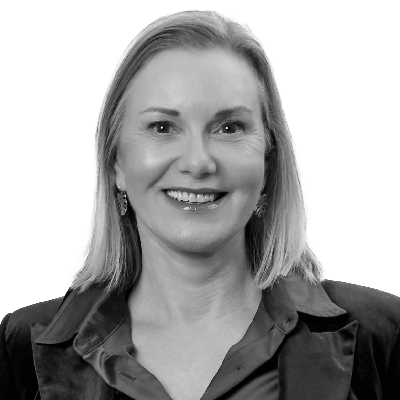
Anet Ahern
Asset Management
As we are hastening towards the end of another volatile year, investors may be forgiven for wishing a quieter and more predictable 2024 lies ahead. However, we have argued for some time that the environment is most likely in the process of undergoing a structural inflection after a prolonged period following on the Global Financial Crisis (GFC), during which imbalances grew and accumulated. The painful process of unwinding these imbalances is not proceeding smoothly, or quickly.

Introduction
As we are hastening towards the end of another volatile year, investors may be forgiven for wishing a quieter and more predictable 2024 lies ahead. However, we have argued for some time that the environment is most likely in the process of undergoing a structural inflection after a prolonged period following on the Global Financial Crisis (GFC), during which imbalances grew and accumulated. The painful process of unwinding these imbalances is not proceeding smoothly, or quickly. Nevertheless, it is providing investors with the opportunity to digest the likely impact of the changes afoot, and adjust their portfolios to an environment where the drivers of returns in the unfolding landscape are likely to look considerably different to those of the past. A large number of market participants, however, are still underestimating how fundamental these transitions are likely to be.
The concept of ‘safe haven assets’ is one such foundational concept that forms a well-used cornerstone for portfolio construction. Head of Research Kevin Cousins argues in the first article, Rethinking ‘safe haven’ assets, there are signs that US Treasuries may not be as well poised to fulfil this role in the future – despite having been the world’s go-to safe haven asset for several decades. Kevin highlights that investors should consider the impact of different assets acting as safe haven assets as the environment changes, and ask what this would mean for their portfolios.
In the second article, Global investing in a changing world, Fund Manager Philipp Wörz underscores the dangers in adopting a ‘business as usual’ mindset as the global investment environment shifts. He highlights the role of sound research and an appreciation of historical context when it comes to countering the recency bias, which leads investors to overweight the relevance of recent experience in their decision-making process, and which may be contributing to the concentration in positioning that we detect in many indices and portfolios. If the past is likely to be a poor predictor of future success, then investors can benefit from partnering with independent thinkers who are well positioned to find the areas of opportunity outside the popular (but increasingly challenged) and crowded areas of the market.
Lastly, Head of Fixed Income Lyle Sankar explains how we remain focused on managing the risk in our funds while constructing diversified portfolios that help clients achieve their income objectives. In South African fixed income – skewing the odds in your favour, Lyle aims to crystallise our position on investing in South African government bonds – an emotive subject, since it touches on the management of the country, something which we are all passionate about.
Throughout this edition, we aim to share with investors how we incorporate our 3M investment approach when weighing the myriad of investment options available to investors, and use our independent research and thinking to our investors’ advantage when constructing our portfolios.
We trust that you will find these articles insightful, and their guidance valuable in these turbulent times.

Recommended news
Angles & Perspectives - Third Quarter 2023
In this edition, Head of Research Kevin Cousins scrutinises the long-standing role of US Treasuries as safe haven assets, and asks whether they will continue fulfilling this role in the future. Fund Manager Philipp Wörz highlights that many investors seem to be following a ‘business as usual’ approach that may be ill-equipped to weather a changing of the guard as the environment is probably undergoing a structural inflection. Lastly, Head of Fixed Income Lyle Sankar explains how we remain focused on managing the risk in our funds while constructing diversified portfolios that help clients achieve their income objectives.
Read moreRethinking ‘Safe Haven’ Assets - Angles & Perspectives Q3 2023
The concept of ‘safe haven assets’ is a foundational concept and a well-used cornerstone for portfolio construction. Head of Research Kevin Cousins argues in the first article, Rethinking ‘safe haven’ assets, there are signs that US Treasuries may not be as well poised to fulfil this role in the future – despite having been the world’s go-to safe haven asset for several decades. Kevin highlights that investors should consider the impact of different assets acting as safe haven assets as the environment changes, and ask what this would mean for their portfolios.
Read moreGlobal Investing in a Changing World - Angles & Perspectives Q3 2023
Fund Manager Philipp Wörz underscores the dangers in adopting a ‘business as usual’ mindset as the global investment environment shifts. He highlights the role of sound research and an appreciation of historical context when it comes to countering the recency bias, which leads investors to overweight the relevance of recent experience in their decision-making process, and which may be contributing to the concentration in positioning that we detect in many indices and portfolios. If the past is likely to be a poor predictor of future success, then investors can benefit from partnering with independent thinkers who are well positioned to find the areas of opportunity outside the popular (but increasingly challenged) and crowded areas of the market.
Read moreSouth African Fixed Income – Skewing the Odds in Your Favour - Angles & Perspectives Q3 2023
In this article Head of Fixed Income Lyle Sankar explains how we remain focused on managing the risk in our funds while constructing diversified portfolios that help clients achieve their income objectives. Lyle aims to crystallise our position on investing in South African government bonds – an emotive subject, since it touches on the management of the country, something which we are all passionate about.
Read more
Stay Informed
Sign up for our newsletters and receive information on finance.
